
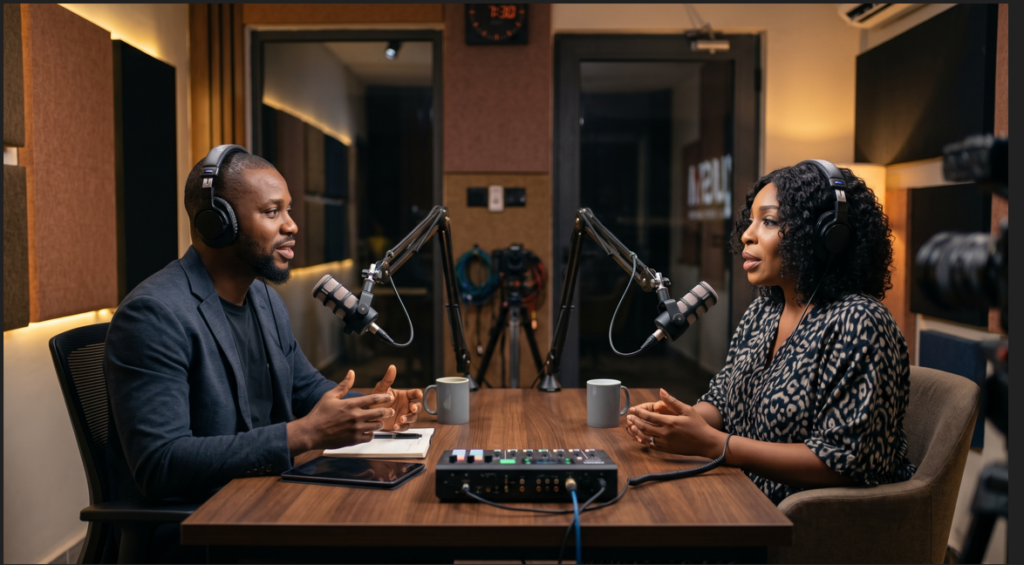
Time Out With Mopelola Adeniyi:
The Nigerian Ghostwriter Preserving
Family Biography Legacies Through Storytelling
In a world where stories shape reputations, preserve family histories and inspire future generations, the ability to tell a compelling story is invaluable. Yet, many people with remarkable life experiences struggle to put their stories into words. This is where professional ghostwriters and biographers make a difference.
Mopelola Adeniyi is a Nigerian ghostwriter, biographer, publisher and entrepreneur with over a decade of experience helping people transform their experiences, ideas and achievements into compelling written works.
She is the founder of The Scribes Media, a leading ghostwriting and publishing services company specialising in biographies, memoirs, and legacy books. She is also the founder of ITAN Global Publishing, a digital publishing platform established to help African authors bring their books to readers globally.
Known for her interest in stories behind individual achievements, Mopelola approaches biography writing as more than the documentation of dates, events and accomplishments. Her work explores the decisions, struggles, relationships, experiences and values that shape a person’s life.
She shares insights into her journey as a writer, her approach to ghostwriting and biography, the mission behind her businesses, and her vision for African storytelling and publishing.
Editorial note: This is an interview-style article prepared from the professional background and business information available about Mopelola Adeniyi. The answers are written as verbatim quotations from a recorded interview.
Q1: Who is Mopelola Adeniyi?
Mopelola Adeniyi is a Nigerian ghostwriter, biographer, publisher and entrepreneur who helps individuals and organisations turn their stories and ideas into meaningful written works. She is the founder of The Scribes Media and ITAN Global Publishing.
With an academic background in Finance and an MBA from the University of Ilorin, I began her professional journey in the financial sector, working as a stockbroker, professional and investment adviser before moving into media and publishing.
I transitioned into the media industry bringing together my longstanding interest in writing, storytelling and my understanding of business, people and human experiences.
Over the years, I has developed experience across the writing and creativity industry having worked with the Television and the Cinema as a Script Director, Marketing and in the last decade venturing into biography writing, memoirs, business books, fiction, children’s books, including other forms of written communication.
My work as a biographer focuses on preserving personal and professional legacies. Through The Scribes Media, I help business leaders, families, public figures, professionals and other individuals document their experiences in books that can inform, inspire and educate future generations.
As an entrepreneur, I have also extended my interests beyond writing individual books, and publishing to building a digital platform for African authors to publish and distribute their work worldwide through my work at ITAN Global Publishing.
Q2: What inspired Mopelola Adeniyi
to become a ghostwriter and biographer?
“My interest in storytelling began long before I founded my media compnay. I spend a considerable time reading literature as a youngster. You could call me a book ‘worm’. I was comfortable spending a whole weekend submerged in a book. Thus, the most natural thing for a bookworm is to become a writer.”
I started writing fiction at the age of 12, developing an early appreciation for the power of storytelling. I see storytelling as a way of teaching and influencing people irrespective of age. If you want to teach children values that you want them to imbibe throughout their lives, pass it across as a story.
Although I later studied Finance and built a career in the financial and investment sector, my interest in writing remained. My eventual transition into media and publishing reflected a desire to build a career around storytelling and communication.
Over my career as a full-time storyteller and writer, I have authored educational literature for Nigerian schools, scripted projects for television production houses, and produced brand content for major financial institutions, energy corporations, and NGOs.
Overtime, I became particularly interested in the stories of people whose experiences could offer valuable lessons to others. Many accomplished people have lived extraordinary lives but have never documented their journeys. Their experiences may contain lessons about entrepreneurship, leadership, family, faith, resilience, failure and personal growth.
However, knowing how to live an interesting life and knowing how to tell that story effectively are two different things.
I recognised an opportunity to help people bridge that gap.
Through biography writing, I work to ensure that important personal and professional experiences are not lost simply because their owners lack the time, writing skills or narrative expertise to document them.
For me, the work involves more than producing a manuscript. It involves identifying the significance of a person’s experiences and presenting them in a way that readers can understand, appreciate and glean lessons from.
Q3: What makes Mopelola Adeniyi
a leading ghostwriter in Nigeria?
Ghostwriting takes much more than good grammar and well-crafted sentences. At its heart, it is about listening closely. It requires deep research, discretion, empathy, and the ability to share someone else’s ideas while keeping their true voice alive.
Writing a biography is very different from writing fiction. While you still need to be a skilled storyteller, you also need real life experience and maturity. That maturity allows you to read between the lines, hear what isn’t being said out loud, and bring out the true message behind every statement.
Writing a biography also takes clear, analytical thinking. It is very common for writers to get stuck halfway through a project. Faced with years of memories, dates, and stories, it is easy to lose direction. Some writers give up entirely, while others rush through and end up with a confusing mess. Over the years, I have had to step in and rewrite manuscripts that fell apart for this exact reason.
A great biography isn’t just about beautiful writing, it is about structure, focus, and smooth pacing. You have to organize complex stories so the reader can follow along easily. It takes years of hands-on experience and a strong commitment to doing things right to turn someone’s life story into a book they can be proud of.
My approach centres on several principles.
-
Preserving the client’s authentic voice
A ghostwritten book should sound like the person whose name appears on the cover. Although the ghostwriter is responsible for shaping the manuscript, the client’s personality, values, expressions and perspective should remain recognisable.
-
Telling stories rather than merely presenting facts
A list of achievements may establish what someone has accomplished, but a well-written story helps readers understand how those achievements came about. My approach to biography seeks to explore the motivations, challenges, decisions and turning points behind a person’s journey.
-
Researching and organising information
Clients often provide information through interviews, photographs, personal documents, recordings and recollections. We organise these materials into a coherent narrative while identifying areas that require clarification.
-
Making complex experiences accessible
A good biography should be understandable to readers who may have little knowledge of the subject’s profession, family or background. Clear language and thoughtful storytelling help make the book accessible without reducing the significance of its subject.
-
Balancing storytelling with accuracy
Biographies represent real people and real experiences. Their credibility depends on careful handling of information, appropriate verification and a clear distinction between documented facts and personal recollections.
These principles inform the work of The Scribes Media and help explain why experienced ghostwriters and biographers can be valuable partners for people who want to preserve their stories.
Q4: Tell Us About The First Biography You Wrote
I wrote my first biography about ten years ago after being commissioned to tell the story of a prominent medical doctor and former Lagos State Health Commissioner. At first, I hesitated. I wondered if I was truly ready to capture the legacy of someone so accomplished. But I quickly checked my doubts and accepted the challenge.
Up to that point, I had built solid experience writing TV scripts, fiction, and school literature books, so storytelling was already familiar ground. Still, this project had unique hurdles: there was very little archival material, and the doctor was almost completely unavailable for interviews.
Relying on deep research, creative problem-solving, and my storytelling background, I pieced her journey together. In the end, the completed biography stunned both the client and the family. not only the commissioner, but also the visitors who attended her 70th birthday event.
Q5: What Skills Do You Think
A Ghostwriter/Biography Writer Should Have
Answer
That’s a very good question. Biography writing is not for every writer, especially beginner writers. There are certain skills and abilities a biographer must have built overtime to make their work a master-piece.
Beyond the writing ability, to write a good biography, you must have the following skills:
-
Thinking/Analytical Ability
Not all biographies are the same as the customers are unique and different. Some clients are natural talkers, they tell you all you need and more during the interview process, while others are not comfortable with sharing information. For the sanguine client who loves to talk a lot, you will have to be able to decide which part of the excess information is necessary and which is not. And for the withdrawn client, who finds it difficult to share; you have to be able to read between the lines without probing.
-
Asking The Right Questions
The ability to ask the right questions differentiate an amateur writer to an expert Biographer. Beyond the story told by the client, are you able to deep-dive into delicate and personal areas of the client’s life with care and sensitivity without getting resistance? The answers to these questions are the arcs, and twists behind the story that makes it unforgettable.
-
Imaginative Mind:
A writer must be imaginative otherwise, he is not a writer. To write compelling biography pieces, you must have a vast imaginative mind. An imaginative mind will make you see beyond the notes, the lines and what is said. An imaginative mind will juggle scenarios, wonder what caused this reaction, what led to what, an imaginative writer figuratively visited the scene in his mind to be able to produce the desired result.
-
Order and Organization
A good biography should have be written sequentially in an order that follows how events happened. This will make the story easy to understand and follow, i.e organising the material into a narrative that readers can follow.
-
Creativity and Intelligence
I have always said that writing a biography is not about stringing words together, but the ability to combine and use many skills at the same time. It takes an intelligent mind to be able to bring beautiful story out of a mass of information, and interview data. It takes an intelligent mind to understand how to join the pieces of a story together. It takes an experienced and matured mind to know what add and remove, what to say and not say. I have heard stories of writers who abandon the biography work half way. They got confused and do not know how to continue.
Q6: What is the difference between a
ghostwriter and a biographer?
Although the terms are sometimes used interchangeably, ghostwriting and biography writing describe different aspects of the writing process. A ghostwriter writes on behalf of another person, while a biographer documents and interprets the life of a subject.
A ghostwriter may work on a business book, memoir, autobiography, speech, article or other written material. The client is generally recognised as the author of the finished work under the agreed arrangement.
A biographer, on the other hand, focuses specifically on a person’s life. This involves researching the subject, gathering information, organising events and presenting a coherent account of the person’s experiences and significance.The two roles overlap when a professional biographer ghostwrites a client’s autobiography or memoir.
For example, a business founder may want to document how a small enterprise grew into a successful company. The client supplies the experiences, memories, records and insights, while the ghostwriter conducts interviews, structures the narrative and develops the manuscript.
The resulting book combines the client’s lived experience with the writer’s storytelling and editorial expertise.
Q7: How do you Mopelola Adeniyi approach biography writing?
I believe that writing a person’s life cannot be fully represented by a list of dates, appointments, achievements and milestones. The deeper story often lies in the reasons behind those events.
Why did a person choose a particular career? What circumstances shaped a major decision? How did the subject respond to failure? What role did family, education, faith, mentorship or opportunity play in the person’s development? These questions help uncover the human experiences behind the public record.
My approach involves understanding the subject’s background, gathering relevant information, identifying important turning points and organising the material into a narrative that readers can follow.
A compelling biography may explore childhood influences, formative relationships, career decisions, business challenges, personal sacrifices and moments of transformation.
It should also make room for complexity. Real lives are rarely straightforward, and an honest account may need to address mistakes, disappointments, difficult decisions and lessons learned.
For family biographies, this process can be particularly meaningful. Stories that might otherwise disappear with older generations can be preserved for children, grandchildren and future descendants.
For business leaders and public figures, biography can provide insight into the experiences and principles behind their achievements.
Ultimately, the objective is to create a book that does more than tell readers what happened. It should help them understand why the events mattered and what lessons can be learned from them.
Q8: How does The Scribes Media
turn a person’s life story into a book?
The process begins with understanding the client’s goals and the story they want to tell.Every biography project is different, but the general process involves several stages.
Step 1: Initial consultation
The client discusses the proposed book, its purpose, intended audience, scope and expectations. This helps establish whether the project is a biography, autobiography, memoir, family history or another form of book.
Step 2: Information gathering and interviews
We gather information through interviews, existing documents, recordings and other relevant materials. These sources help build an understanding of the subject’s life and identify areas requiring further discussion.
Step 3: Research and story development
The information is organised chronologically or thematically, depending on the nature of the book. Important events, turning points and recurring themes are identified to establish the narrative structure.
Step 4: Manuscript planning and writing
We develop the book structure and begins drafting the manuscript. The aim is to present the subject’s experiences in a clear, engaging and coherent manner.
Step 5: Client review and revisions
The client reviews the manuscript to clarify details, correct factual errors, provide additional information and ensure that the story reflects their experiences and intentions.
Step 6: Editing and preparation for publication
Once the manuscript is developed, it can proceed to proofreading, formatting, cover design and other publishing stages agreed upon for the project. The duration and cost depend on the book’s length, the availability of source materials, the amount of research required and the scope of the services.
Clients with extensive recordings, documents and existing manuscripts may have a different workflow from those starting with little written material, or those who already has the material we can work with.
Q9: What inspired Mopelola Adeniyi
to establish ITAN Global Publishing?
My work in writing and publishing exposed her to an important challenge: producing a good book is only one part of an author’s journey. Writers also need ways to publish their work, make it available to readers and earn income from their intellectual property.
This challenge is particularly relevant to African authors, who may face barriers related to publishing access, distribution and reaching readers beyond their immediate markets.
ITAN Global Publishing was established to help address some of these challenges through a digital publishing platform designed to connect authors and readers.
The platform supports authors seeking to publish and distribute books, with an emphasis on making African stories more accessible. Its broader purpose is to help writers move from having a manuscript to making a published book available to readers.
For me, this represents an extension of my work in storytelling. While The Scribes Media helps individuals and organisations develop their stories into written works, ITAN Global Publishing focuses on the publishing and distribution opportunities available to authors.
The two businesses operate in related but distinct areas of the book industry. One helps people develop their stories and manuscripts. The other provides a digital platform through which authors can publish and distribute their books.
Together, they reflect an interest in both the creation of stories and the systems that help those stories reach an audience.
Q10: What is ITAN Global Publishing,
and how does it help African authors?
ITAN Global Publishing is a digital publishing initiative I founded to support authors in publishing and distributing books. Its publishing platform is designed to give authors a route to making their work available online while helping the readers across continents discover African books.
The platform’s focus on African authors and stories reflects an interest in expanding the visibility of African literary voices. African writers have diverse experiences to share, including stories rooted in local communities, cultural traditions, contemporary urban life, historical experiences, family relationships and changing social realities. However, the existence of talented writers does not automatically guarantee that their work will reach readers.
Digital publishing can help reduce some traditional barriers by providing online access to books and creating opportunities for authors to reach readers beyond their immediate geographical locations.
ITAN Global Publishing aims to contribute to this environment by providing publishing and distribution infrastructure for authors.
For writers considering the platform, important questions include the types of books accepted, publishing requirements, distribution arrangements, royalties and payment procedures. Authors should review the platform’s current terms and guidelines to understand the arrangements applicable to their books.
ITAN’s broader ambition is to contribute to an environment in which African authors can publish their work and build sustainable relationships with readers.
Q11: What challenges do African
authors face in the publishing industry?
African authors work in a diverse literary environment, but publishing and distribution remain important considerations for writers seeking to build readerships.
One challenge is discoverability. Even a well-written book may struggle to find readers if potential audiences do not know it exists.
Another challenge is access to publishing opportunities. Authors need reliable ways to prepare their manuscripts, publish their books and make them available to readers in different locations.
Distribution is also important. A writer’s ability to reach readers outside their immediate community can influence the visibility and commercial potential of their work.
There is also the question of representation.
African stories cover a wide range of experiences, languages, cultures, histories and contemporary realities. Ensuring that these experiences are documented and made accessible contributes to the preservation and development of African literature.
Digital platforms offer one way to expand access and discoverability, although they do not eliminate every challenge associated with publishing.
Addressing these issues requires contributions from authors, publishers, editors, booksellers, technology companies and readers.
Through my work in writing and digital publishing, I operate in two parts of this ecosystem: manuscript development and the distribution of published work.
Q12: What is Mopelola Adeniyi’s
vision for the future of African storytelling?
My work across writing and publishing reflects an interest in helping stories move from personal experience to written records and, ultimately, to readers.
Biographies and memoirs can preserve the experiences of individuals and families. Business books can communicate entrepreneurial lessons. Fiction can explore African realities, imagination and cultural experiences. Digital publishing can create additional opportunities for these works to reach audiences.
These forms of storytelling serve different purposes, but each contributes to the wider literary landscape.
For African authors, the opportunity is not limited to writing about the past. It also includes documenting contemporary life, exploring new ideas, creating imaginative worlds and expressing experiences that may otherwise receive limited attention.
A strong publishing environment needs both compelling stories and effective ways to make those stories available.
Through The Scribes Media, I help people develop written works from their experiences and ideas. Through ITAN Global Publishing, I am working within the digital publishing space to support authors and improve opportunities for book distribution.
My work bring together storytelling, business and publishing with a common interest in preserving knowledge and helping written works reach readers.
Q13: How can you work with
Mopelola Adeniyi or The Scribes Media?
Individuals, families, entrepreneurs, professionals and organisations interested in documenting their stories can explore the services offered by The Scribes Media. The company works on writing projects that may include biographies, autobiographies, memoirs, family histories, legacy books and other forms of ghostwriting.
The first step is to define the purpose of the book and the information already available.The cost and timeline will depend on factors such as the length of the proposed book, the volume of research required, the number of interviews and the publishing support included.
Clients should discuss their expectations with The Scribes Media to determine the most appropriate approach for their projects.
For details on how to contact The Scribes Media, visit : https://www.thescribesmedia.com
About Mopelola Adeniyi
Mopelola Adeniyi is a Nigerian ghostwriter, biographer, publisher and entrepreneur with over a decade of experience in writing and storytelling. She is the founder of The Scribes Media, a media and writing services company, and ITAN Global Publishing, a digital publishing initiative supporting authors and book distribution.
Her work spans biographies, memoirs, legacy books, business writing, fiction and other forms of written communication. With academic qualifications in Finance, an MBA from the University of Ilorin, and other professional qualification in Tech, Marketing and Management, Mopelola combines her business background with her longstanding interest in storytelling.
Her approach to biography writing emphasises the experiences behind achievements, the lessons embedded in personal histories and the importance of preserving stories for future generations.
Through her work in writing services and publishing, she contributes to the process of helping individuals document their experiences and helping authors bring written works to readers.
Frequently Asked Questions
About Mopelola Adeniyi
These questions provide concise answers to common searches about Mopelola Adeniyi, her businesses and her professional work.
Who is Mopelola Adeniyi?
Mopelola Adeniyi is a Nigerian ghostwriter, biographer, publisher and entrepreneur. She is the founder of The Scribes Media and ITAN Global Publishing and has over a decade of experience in writing, storytelling and publishing.
Is Mopelola Adeniyi a ghostwriter in Nigeria?
Yes. Mopelola Adeniyi works as a professional ghostwriter and biographer in Nigeria. Through The Scribes Media, she provides writing services for biographies, memoirs, legacy books, business books and other manuscripts.
What is The Scribes Media?
The Scribes Media is a Nigerian writing and publishing services company founded by Mopelola Adeniyi. Its services include biography writing, memoir writing, ghostwriting, manuscript development and publishing support.
What is ITAN Global Publishing?
ITAN Global Publishing is a digital publishing initiative founded by Mopelola Adeniyi. It aims to help authors publish and distribute books through an online platform, with an emphasis on African authors and stories.
How can I hire a biography writer in Nigeria?
To hire a biography writer in Nigeria, identify your book’s purpose, intended audience, estimated length and available source materials. Then contact us at The Scribes Media to discuss the scope, process, timeline and cost of the project.
How much does a ghostwriter cost in Nigeria?
Ghostwriting fees vary according to the writer’s experience, manuscript length, research requirements, number of interviews, project complexity and additional services. Prospective clients should request a proposal based on their specific requirements rather than assume that every book will have the same price.
Contact The Scribes Media
For details on how to contact The Scribes Media, visit : https://www.thescribesmedia.com
.