
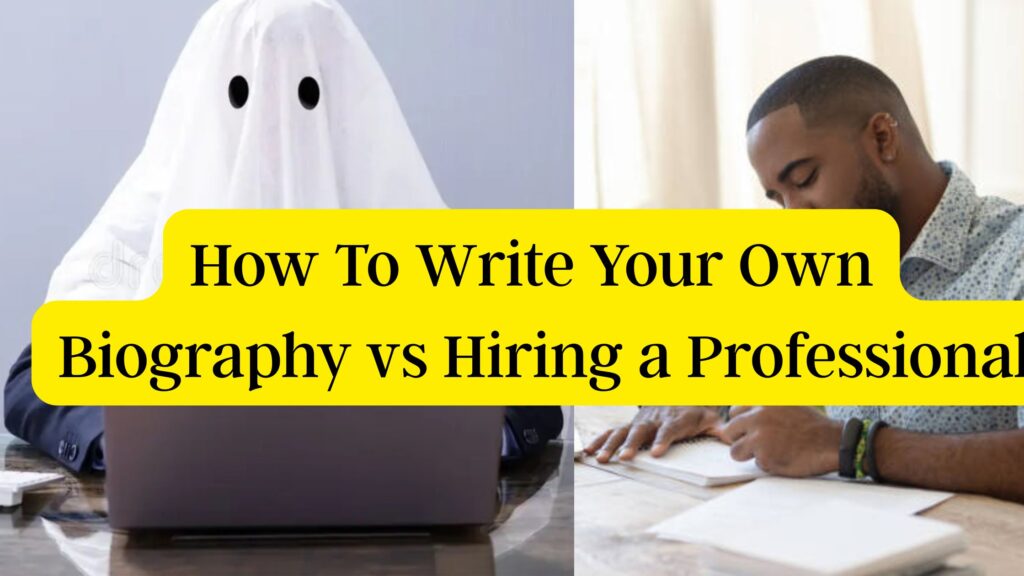
“Step-by-Step Guide”: How to Write Your Own Biography vs Hiring a Professional
Article Summary
- What is a Biography
- Should I write My Biography or Hire a professional Ghostwriter
- Option 1- Writing My Biography
- Step-by-Step: How to Write Your Own Biography
- Pros of Writing Your Own Biography
- Cons of Writing Your Own Biography
- Option Two: Hiring a Professional Biography Writer or Ghostwriter
Every life carries a story worth preserving. Your journey—your struggles, growth, faith, failures, victories, and purpose—forms a narrative that can inspire others, establish authority, and preserve legacy. A biography is not just about what happened; it is about why it matters.
It is more than a life story—it’s your personal brand, legacy, and authority statement. Whether you’re an author, entrepreneur, faith leader, creative, or public figure, a well-written biography helps people understand who you are, what you stand for, and why your story matters.
But when it comes to telling that story, many people face a key question:
Should I write my own biography, or hire a professional?
This guide breaks it down step by step, walks you through both options in detail, helping you understand the process, the emotional and technical demands involved, and which choice best aligns with your goals comparing DIY biography writing with professional biography and ghostwriting services, so you can make the best decision for your goals.
https://thescribesmedia.com/what-does-a-ghostwriter-do-everything-you-need-to-know/
What Is a Biography?
A biography is a carefully structured narrative account of a person’s life. It goes beyond listing dates, achievements, or positions held. A strong biography weaves facts with meaning. It highlights defining moments, inner transformation, lessons learned, and the impact of one’s life on others.
Biographies are commonly used for books, memoirs, legacy projects, faith-based storytelling, founder profiles, speaker introductions, ministry documentation, and personal branding. Regardless of format, the goal remains the same: to tell a truthful, engaging, and purposeful story.
A biography is a factual, narrative account of a person’s life, highlighting:
- Background and formative experiences
- Key milestones and achievements
- Challenges, lessons, and growth
- Purpose, impact, and legacy
Biographies can be written for:
- Books and memoirs
- Websites and personal brands
- Speaker profiles and media kits
- Company founders and leaders
- Ministry, faith, or legacy projects
Option 1: Writing Your Own Biography (DIY)
Writing your own biography can feel empowering. After all, no one knows your life better than you do. However, familiarity can be both an advantage and a limitation. It can be deeply personal and rewarding—but it comes with challenges.
Step-by-Step: How to Write Your Own Biography
Step 1 : Clarifying the Purpose of Your Biography
Before writing a single word, you must understand why you are telling your story. A biography written for a personal legacy project will differ significantly from one intended for public reading, ministry impact, or business branding.
You need clarity on your audience, your core message, and what you want readers to feel or learn when they finish reading. Without this clarity, the writing can become unfocused, overly detailed, or emotionally overwhelming.
Ask yourself:
- Is this for a book, website, or legacy project?
- Who is the target audience?
- What message should readers remember?
Clarity of purpose shapes everything else.
https://thescribesmedia.com/ghostwriting-a-book/
Step 2: Structuring Your Life Story
Most people underestimate how difficult it is to organize a life into a coherent narrative. Life does not happen in neat chapters, yet biographies must.
At this stage, you must identify major phases of your life—early upbringing, formative experiences, career or ministry beginnings, major turning points, failures, breakthroughs, and present purpose. The challenge is deciding what to include and what to leave out, which often proves emotionally difficult.
Break your life into phases:
- Early life and background
- Education or formative years
- Career or ministry journey
- Key turning points
- Current work and future vision
Step 3: Choosing the Right Tone and Voice
Your biography’s tone determines how readers connect with you. Some biographies are reflective and intimate, others are inspirational, narrative storytelling, professional, or faith-centered.
When writing your own biography, maintaining a consistent tone is difficult. Writers often swing between being too modest, overly detailed, or unintentionally self-promotional. Striking the right balance requires both emotional awareness and writing discipline.
Step 4: Writing the First Draft
The first draft is where many people get stuck. Writing about your own life forces you to relive painful moments, confront failures, and articulate deeply personal experiences. This emotional proximity can slow progress or cause prolonged pauses.
At this stage, perfection should not be the goal. However, many self-written biographies stall here because the writer becomes overwhelmed by self-editing, doubt, or fatigue.
Step 5: Editing and Refinement
Editing your own biography is often harder than writing it. It requires stepping back emotionally to assess clarity, flow, repetition, grammar, and narrative strength.
Most self-written biographies struggle at this stage due to lack of objectivity. Important moments may be underexplained, while less relevant details are overemphasized. This is where many DIY biographies remain unfinished or unpublished.
The Reality of Writing Your Own Biography
Writing your own biography offers creative control and deep personal involvement, but it demands time, emotional resilience, writing skill, and discipline. Without these, the final result may lack structure, clarity, or professional polish.
Pros of Writing Your Own Biography
- Full creative control
- Deep personal expression
- Lower financial cost
Cons of Writing Your Own Biography
- Emotional bias and blind spots
- Difficulty structuring the story
- Time-consuming and mentally draining
- Risk of poor flow, tone, or clarity
Option Two: Hiring a Professional Biography Writer or Ghostwriter
Hiring a professional shift the burden of structure, clarity, and refinement while allowing you to remain the true voice behind the story.
The Discovery and Interview Process
Professional biography writing begins with deep conversations. Through interviews, listening sessions, and document reviews, the writer uncovers not just what happened in your life, but why it mattered.
This process often brings clarity even to the client, helping them see patterns, themes, and meaning they may not have recognized on their own.
Narrative Structuring and Story Development
A professional writer organizes your life into a compelling narrative arc. Instead of listing events, they identify turning points, emotional beats, and lessons that resonate with readers.
This structure ensures your biography flows naturally, holds attention, and communicates purpose rather than confusion.
Voice Matching and Authenticity
One of the greatest fears people have is losing their voice. A skilled professional does the opposite—they study your speech patterns, beliefs, tone, and values to ensure the biography sounds unmistakably like you.
The result is a refined version of your voice, not a replacement.
Writing, Editing, and Polishing
Professional biography writers handle drafting, revising, editing, and final polishing. They ensure grammatical accuracy, emotional balance, cultural sensitivity, and readability.
The final product is publication-ready and suitable for books, websites, or brand platforms.
Comparing Both Options Honestly
Writing your own biography gives you full control but requires significant time and emotional labor. Hiring a professional saves time, brings objectivity, and delivers a polished narrative with greater impact.
The decision depends on your goals. If the biography is personal and informal, DIY may work. If it is meant for public influence, legacy, ministry, or branding, professional writing often produces far better results.
Common Questions People Ask
Hiring someone to write your biography is ethical and widely accepted. The story remains yours, and you typically retain full ownership. Your story is safe because Professional writers operate under confidentiality agreements and collaborative processes.
Final Reflection
Your life story deserves care, clarity, and excellence. Whether you choose to write it yourself or work with a professional, the most important step is deciding not to let your story remain untold.
A well-written biography is not self-promotion—it is stewardship of experience, wisdom, and legacy.
Start Your Biography with The Scribes Media Agency
If you are ready to transform your life story into a clear, compelling, and professionally written biography, The Scribes Media Agency is here to help.
We specialize in biography and ghostwriting for:
- Authors and creatives
- Entrepreneurs and founders
- Faith leaders and ministers
- Professionals and legacy builders
💬 Chat with us directly on WhatsApp to begin your biography journey:
👉 https://wa.me/9034611191
Your story matters. Let’s tell it with clarity, depth, and lasting impact.


